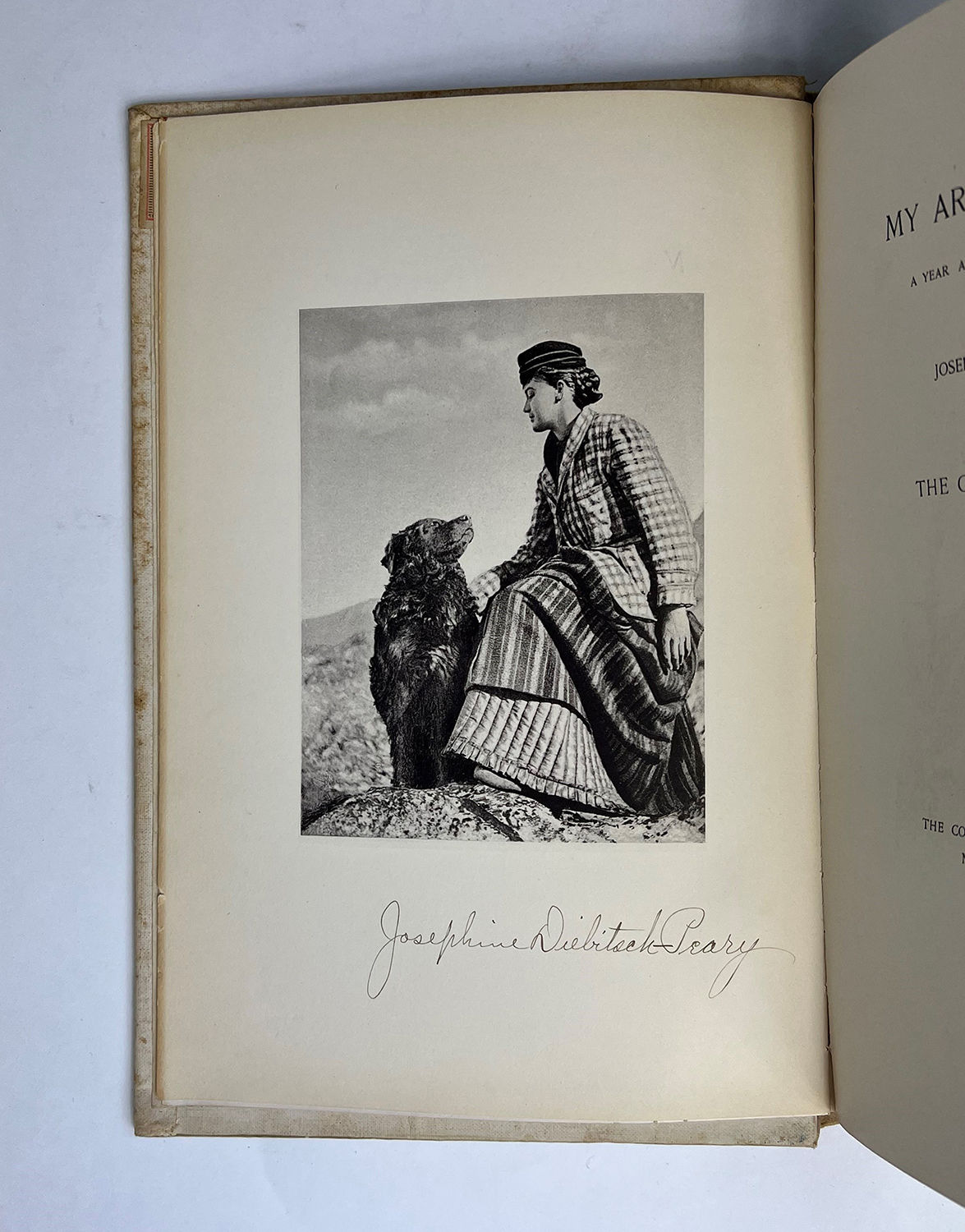
The book My Arctic Journal: A Year among Ice-Fields and Eskimos, written by the woman explorer Josephine Peary, is a lucid memoir of a woman who opts to travel with her husband, the North Pole explorer Robert Peary, to the mysterious, rough, and unexplored ice fields of Greenland, rather than being confined to the four walls of her home. Written in the late 19th century, this memoir becomes a seminal work for folks motivated to explore the untouched and undocumented landscapes of the earth, especially for women. Let’s not forget that Josephine undertook such a challenging, path-breaking exploration when women were commonly groomed merely for a suitable wedding. She also succeeds in breaking the existing divide between men and women in the field of exploration and laying the foundation for future generations by undertaking this journey.


What really impressed me about Josephine’s writing is her unfiltered accounts and opinions on the weather, Greenlanders, Eskimos, etc. Rather than masking her real feelings, whether it be her first thoughts about the appearance of the natives, their low cleanliness standards due to ignorance, their customs and rituals, etc., she accepts them and documents them to project the exact picture of this challenging project. I call this project challenging because such explorations aren’t fancy and luxury travels undertaken to pamper oneself. These back-breaking, mentally stressful, and unpredictable exploration journeys are rather full of unimaginable climatic and environmental dangers capable of breaking your spirits and bringing you closer to death at any moment. Therefore, I would avoid making any comment on her feelings about the natives whom she, without any premeditated approach, called ugly. Let’s not forget that language has undergone a lot of revolutionary changes since the time this book was written, and the current writers definitely try to avoid the usage of biased and inegalitarian words for any particular community, particularly words that define appearance or beauty.


Josephine was not just a bystander in the entire exploration. Despite accompanying the team as Robert Peary’s wife, she never shirked from participating in demanding activities, such as cooking, hunting seals for food, facing all dangers bravely, and strategically deciding on the dress according to the weather, etc. As a multitasker, she seemed to have more work than at home. It was unimaginable to me that Josephine’s journey was full of hardships from the start. She had to not only endure the roughness of the weather and the ship trying to make its way through bergs and thick ice sheets, but also look after her husband, who fractured his leg when the ship almost went out of control in the tussle with the bergs. This incident exacerbated her hardships by leading to sleepless nights spent nursing her husband, moaning in pain. Josephine comes across as a highly sincere and hard-working woman who endures all pain and does not glorify it to gain attention. One can also feel her strong attachment to her husband when she spends many nights worrying about his well-being and simultaneously managing other activities with so much dexterity.
Josephine clearly played a vital role in motivating her husband and other members by keeping things in order, especially food, shelter, and clothes. Therefore, one cannot strike off her contribution in this exploration. What struck me most personally was her endurance in preparing and cooking food for so many men, using whatever was available at the store. It’s definitely not easy, and I, as a reader and a woman, can absolutely understand her nostalgic soliloquies, in which she clearly expresses her yearning to see her family and friends. Whether it’s keeping a happy, brave face in tough times or making others feel at home by celebrating their anniversaries, social events like Thanksgiving and Christmas, Independence Day, etc., Josephine just keeps everyone emotionally together. She is equally adept at hunting and shooting local animals, such as seals, reindeer, and birds, and proves an asset to the exploration team. She remains practical and chimes in with others as needed. Therefore, one can see how easily she overcomes her inner inhibitions and feelings to connect with the natives and work along with them in stitching weather-friendly clothes, arranging other safety equipment, learning the local ways of cleaning animal skin, collecting bird eggs on plateaus, overhauling large stinking seals, living with other locals in the igloo, etc. Josephine’s account of the Arctic region journey is a kind of sociological and ethnological survey of the region and its inhabitants. Her memoir enables readers to understand the landscapes, anatomy of the locals, their social and cultural customs, their myths, their language, their problems, etc. This book is definitely a must-read for people looking for a mix of adventure and knowledge about such far-flung regions.
Leave a Reply